The Meaning of Mahjong, Revisited
It's time to talk about mahjong. Again.
Back in 2021, a Texas-based mahjong company had taken it upon themselves to give the 200-year-old Chinese game a "respectful refresh." Instead it felt more like appropriation and erasure. Traditional symbols such as ancient coins, bamboo, and the three "dragons" were replaced with soap bars, palm trees, and flour sacks.
After facing backlash, they were forced to apologize. However, five years later, businesses are once again exploiting the joy and community of mahjong without acknowledging the game’s history and meaning, while at the same time astronomically hiking their prices.
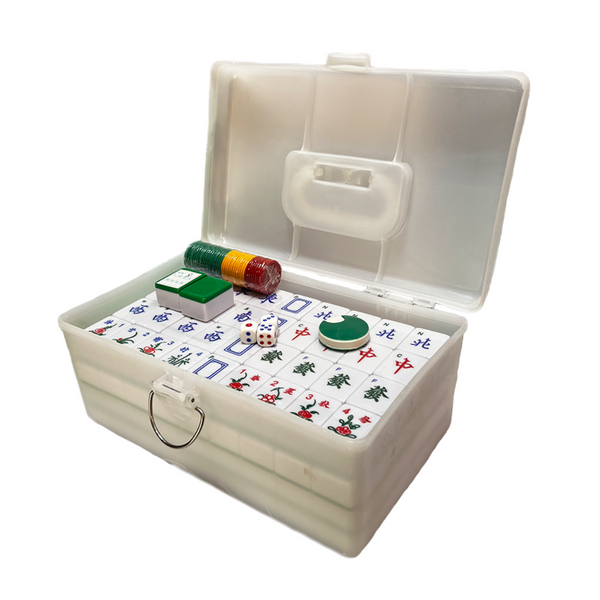
So we're here again to share our thoughts from 2021 (and to remind you our sets are just $89 😊):
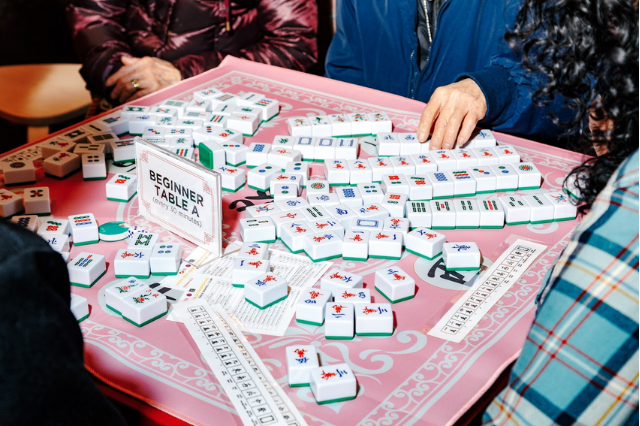
There’s nothing like the vivid art, smooth lines, and satisfying clacks of a classic mahjong set. For generations of Chinese and Chinese Americans, mahjong represents home, family, belonging, and of course multi-generational trash-talking. While the game today is played around the world by people of every ethnicity, its history and many points of symbolism should be learned and acknowledged by anyone who claims to love the game.
For instance, did you know it was probably born near Shanghai in the 19th century? And that its original name was “sparrow,” named for the clacking bird-like noises of the tiles? Also, the tiles’ symbols are full of both historical and cultural significance:
Both the circles and bamboo represent ancient Chinese currency, the former a “tong,” a coin with a square hole in the middle, and the latter, strings of such coins.
The character under the numbers? That’s “wan” or 10,000, used in Chinese to express “the biggest number possible” (hence, uttering “10,000 years!” to wish someone long life).
The honor tiles are made up of:
- The “winds,” represented by the four directions: east, west, north, and south
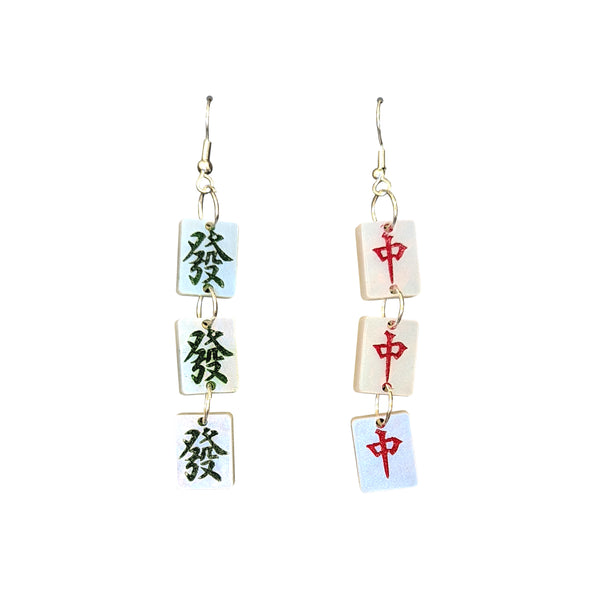
- The “dragons,” represented by three symbols: a red “zhong,” embodying benevolence; a green “fa,” which comes from “fa cai,” meaning “strike it rich”; and a "bai ban” or white door, symbolizing freedom from corruption
Each one full of meaning and more than just a pretty picture.
Featured Products